
What a day looks like
Calm first, then everything else.
Mornings are built around reading and math in small groups. Afternoons open up into science, art, life skills and the ordinary business of growing up.
A day here
The shape of the day changes as students get older. Pick the one that fits your child.
Arrival, unhurried
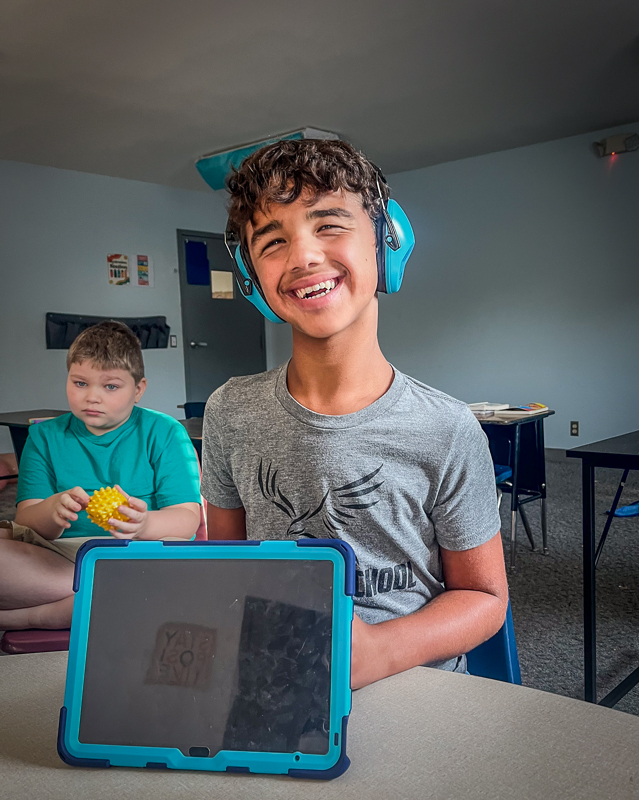
Somebody says your kid’s name at the door and means it. The first fifteen minutes look the same every single day, which is the point.
Reading, writing and numbers
Mornings are for reading, writing and math, in groups set by where a student actually is rather than what grade they are in. They move up when they’ve got it, not when the calendar says so. Recess breaks up the morning.
Lunch and moving around
Breaks are on the schedule rather than something a student has to earn. Lunch is small, and an adult is always sitting with them.
Stories, crafts and sensory work
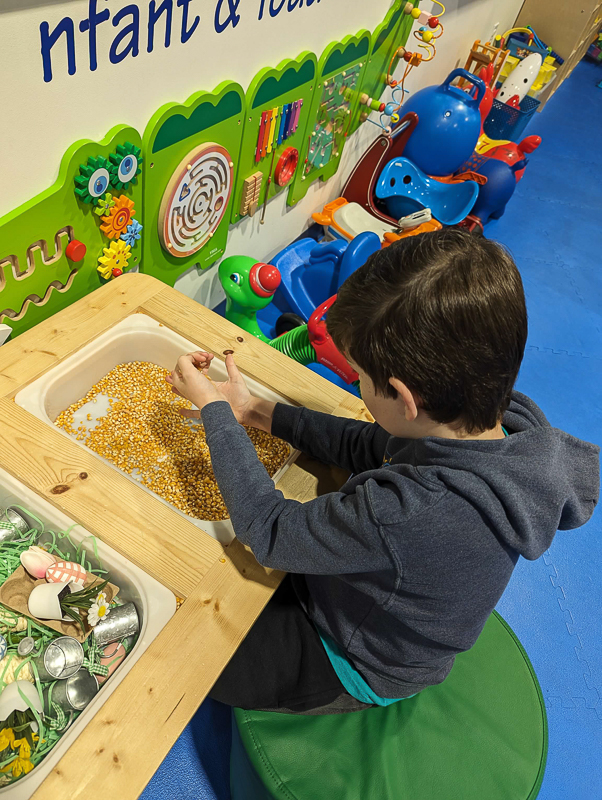
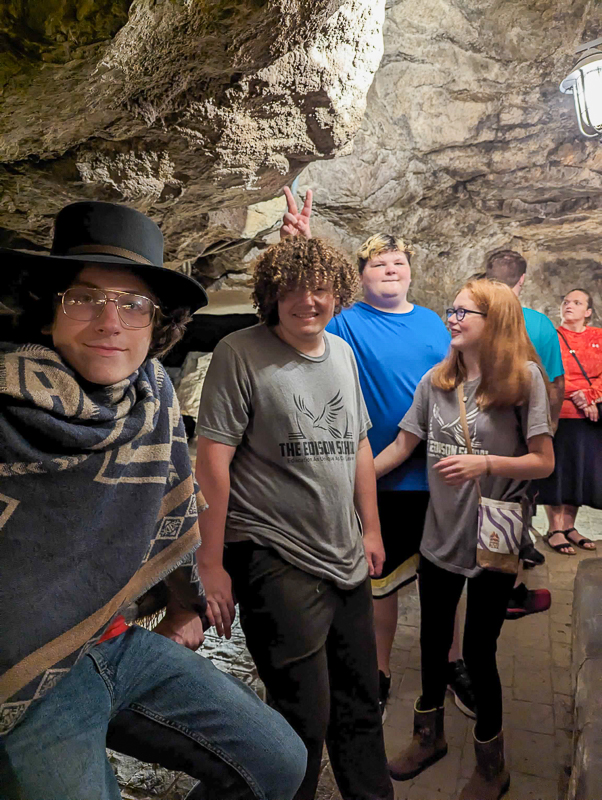
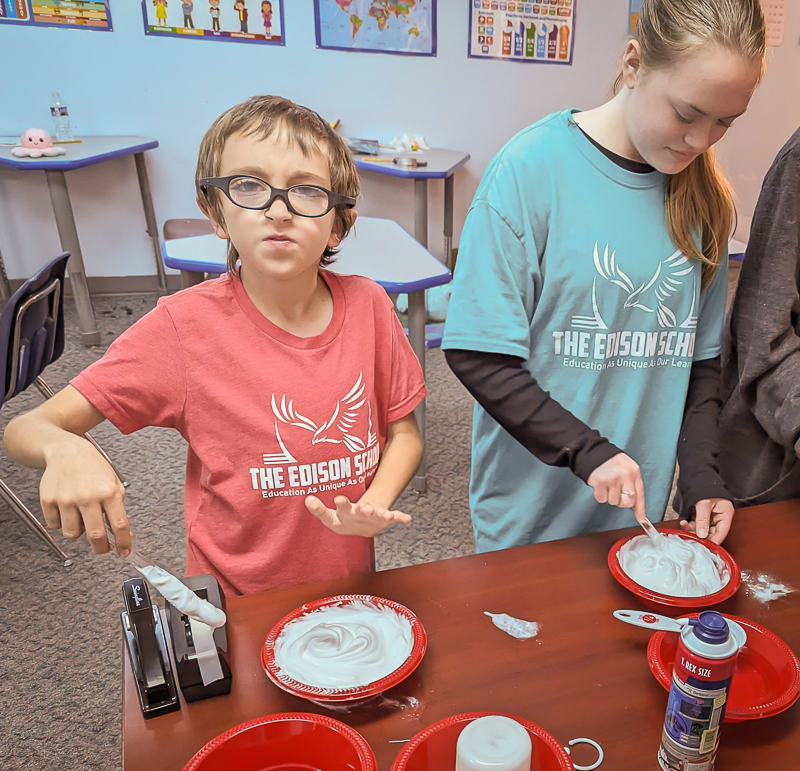
Afternoons run on story times built around a theme, crafts, sensory integration, and another recess. Learning also goes beyond the classroom through special experiences and field trips throughout the semester.

Arrival, unhurried
Somebody says your kid’s name at the door and means it. The first fifteen minutes look the same every single day, which is the point.
Core classes, credits that count
Mornings are the core subjects — English, math, science and history — in small groups and on a real transcript. We’re accredited by Cognia, so the credits transfer anywhere.
Lunch and moving around
Breaks are on the schedule rather than something a student has to earn. Lunch is small, and an adult is always sitting with them.
Electives and life skills
Afternoons are electives and life skills, turned toward what comes after graduation: work skills, money, cooking, getting around town, and the ordinary independence that only comes from practice.
Fun Friday
High school Friday afternoons are their own thing. Some weeks they cook a meal start to finish. Some weeks a guest comes in from the community to talk about the work they do, or the group heads off campus — a museum, a grocery run, a restaurant where they order for themselves. It always ends with everybody helping clean up the campus for the weekend. Part life skills, part just fun, and practice at being out in the world, which is the part that is hardest to teach from a desk.
What we promise
Here’s what your child can count on.
01We get to know your child before we teach your child.
How he learns. What she lights up about. The subject that has made him cry. You can’t teach a kid you haven’t bothered to understand, so we start there.
02We teach the child in front of us.
Kids work where they actually are, not where a form says they should be. A student two years behind is met there without any fuss. One three years ahead gets turned loose.
03We rebuild what school took away.
Confidence doesn’t come back because an adult says something encouraging. It comes back from evidence, one real success after another, until “I can’t” turns into “I will.”
04We stand with families who’ve been standing alone.
Most of our parents spent years as their child’s only advocate. That part ends here. You’ll know the plan, and you’ll never be surprised by your own kid’s education.
The numbers that actually matter
4:1
students per teacher. There is no back of the classroom to disappear into.
K–12
Kindergarten through graduation in one building. No starting over, no aging out, no being handed off.
14
years teaching kids that other schools had run out of ideas for. We opened in 2012 and have done nothing else since.
Cognia
Accredited, with a real transcript and credits that transfer anywhere your child goes next.
On the calendar
The days they talk about at dinner.
Most weeks have their rhythm, and then there are the days that break it open. A corn maze in October. Somebody from the neighborhood who comes in to talk about the job your child has been quietly wondering about. A Friday spent cooking a whole meal and eating it together.
Those days are on the calendar right alongside the closings, because they count just as much.
Coming up
- Tuesday, September 8Remote Learning Week – Staff Development
- Wednesday, September 9Remote Learning Week – Staff Development
- Thursday, September 10Remote Learning Week – Staff Development
- Friday, September 11Remote Learning Week – Staff Development
Turning “I can’t” into “I will.”
You have read the schedule. What does not fit on a page is the sound of this building at 8:15, and whether your child would settle in it. Come and stand in it on an ordinary morning.